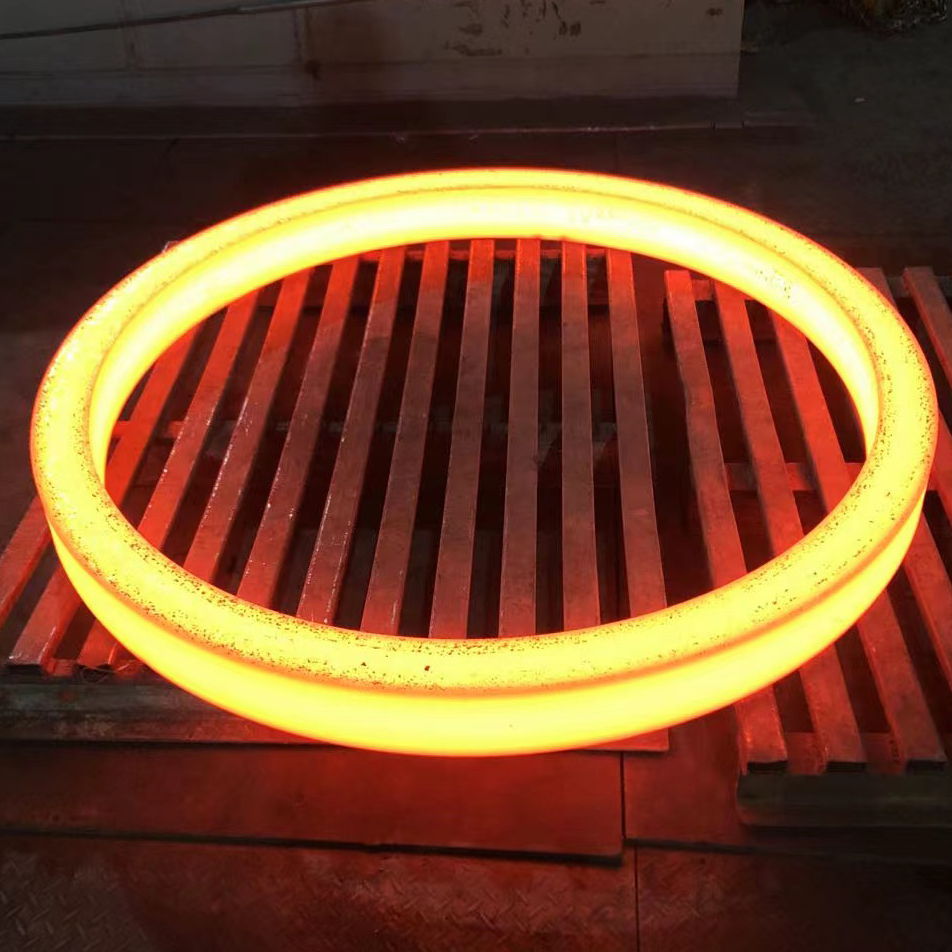
In the forging field (metalworking and manufacturing), the difference between forged and non-forged components lies in the production process, material properties, and performance characteristics. Here’s a detailed breakdown:
1. Forged Components
Process:
-
Metal (usually steel or aluminum) is heated to a high temperature and then shaped under compressive force (hammering, pressing, or rolling).
-
Common methods: Drop forging, press forging, roll forging, and open-die forging.
Key Properties:
✔ Superior Strength – Forging aligns the metal's grain structure, enhancing toughness.
✔ Better Fatigue Resistance – Handles high stress and repeated loads better.
✔ Improved Structural Integrity – Fewer voids or defects compared to casting.
✔ Tighter Tolerances – More precise shapes with less machining needed.
Common Applications:
-
High-stress parts: Crankshafts, connecting rods, gears, aircraft components, tools (hammers/wrenches), and military hardware.
2. Non-Forged Components
Non-forged parts are typically made through casting, machining, or sintering (powder metallurgy).
A. Cast (Non-Forged) Parts
Process:
-
Molten metal is poured into a mold and solidifies.
-
Methods: Sand casting, die casting, investment casting.
Key Properties:
✔ Complex Shapes Possible – Intricate designs that forging can’t achieve.
✔ Lower Cost for Large Parts – Good for mass production.
✖ Weaker Grain Structure – More prone to porosity, cracks, and inclusions.
✖ Lower Fatigue Resistance – Not ideal for high-stress applications.
Common Applications:
-
Engine blocks, pump housings, decorative metalwork.
B. Machined (Non-Forged) Parts
Process:
-
Cut from solid metal blocks (billet) using CNC or manual machining.
Key Properties:
✔ Precision & Smooth Finishes – No grain flow benefits like forging.
✖ Material Waste – More expensive for large parts.
Common Applications:
-
Custom prototypes, precision tools, aerospace fittings.