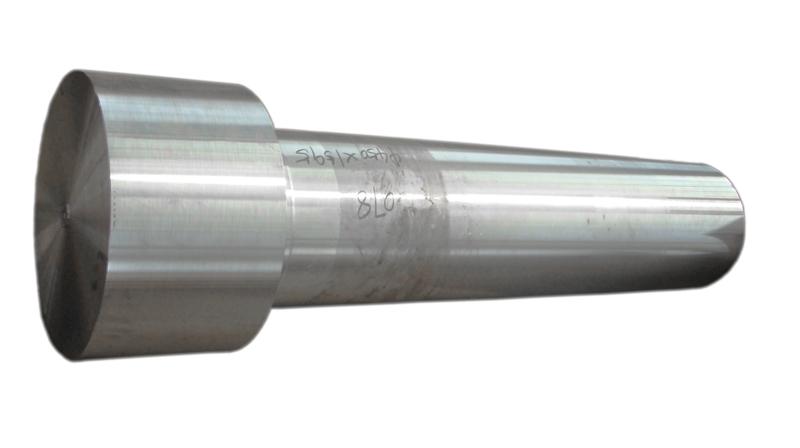
A forged shaft is a type of rotating or stationary mechanical component (such as an axle, driveshaft, or transmission shaft) that is manufactured through the forging process rather than casting, machining from billet, or other methods.
Key Features of a Forged Shaft:
-
Manufacturing Process:
-
Forging involves shaping metal (usually steel or alloy) under extreme pressure using hammers, presses, or dies.
-
This process aligns the grain structure of the metal, enhancing strength and durability.
-
-
Advantages Over Other Methods:
-
Higher Strength & Toughness – Forged shafts handle heavy loads, impacts, and fatigue better than cast or machined shafts.
-
Better Grain Flow – The forging process improves the metal's internal structure, reducing weak points.
-
Superior Fatigue Resistance – Ideal for high-stress applications like automotive, aerospace, and industrial machinery.
-
Lighter & More Efficient – Can be designed with optimized weight-to-strength ratios.
-
-
Common Applications:
-
Automotive: Crankshafts, camshafts, drive shafts.
-
Aerospace: Turbine shafts, landing gear components.
-
Industrial Machinery: Pump shafts, gearbox shafts, heavy equipment axles.
-
Forged vs. Cast or Machined Shafts:
-
Cast Shafts: Cheaper but weaker due to porous structures.
-
Machined Shafts: Precise but may have weaker grain alignment.
-
Forged Shafts: Best for high-performance, high-stress environments.
Conclusion: