Cast Iron vs. Forged Steel: A Metallurgical and Functional Analysis
The choice between cast iron and forged steel is a fundamental one in engineering, manufacturing, and toolmaking. It is not a question of which material is universally "better," but rather which is optimal for a specific application based on its inherent properties, manufacturing process, and performance requirements. To understand this, we must examine the science behind each material and the processes that define them.
1. Foundational Definitions: Process Defines Property
Cast Iron: This is a family of iron-carbon alloys with a carbon content typically greater than 2% (often 2-4%). It is made by melting pig iron, scrap, and other additives, then pouring the liquid metal into a mold where it solidifies into its final shape. The high carbon content forces much of the carbon out of solution, forming either graphite flakes or nodules within a metallic matrix.
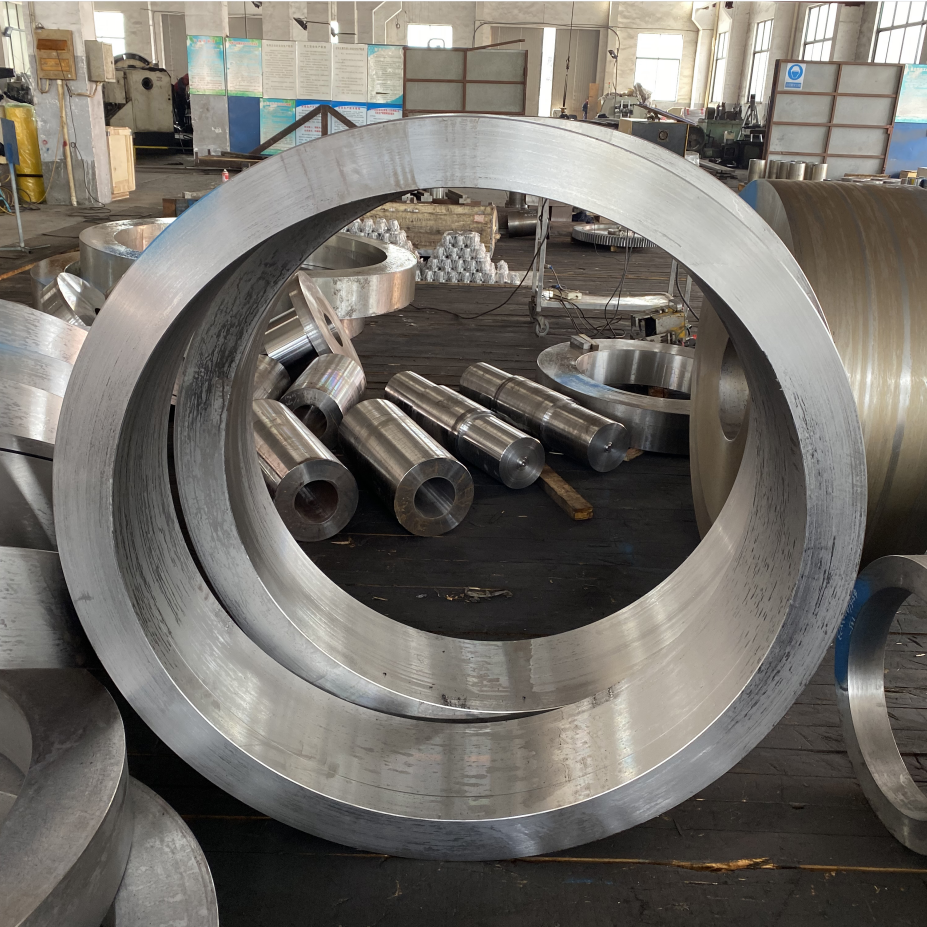
Forged Steel: This refers to steel (an iron-carbon alloy with generally less than 2% carbon) that has been shaped by applying compressive forces—hammering, pressing, or rolling—while in a solid, but often heated, state. The forging process works and refines the metal's internal grain structure.
The key distinction lies here: Cast Iron is defined by its composition and casting process, Forged Steel is defined by its forming process. One can have "cast steel," but "forged iron" (while possible) is commercially rare. The common comparison is typically between Cast Iron and Forged Steel.
2. Metallurgical Structure and Resulting Properties
| Property / Characteristic | Cast Iron | Forged Steel |
| Process | Solidification from liquid state | Plastic deformation of solid state |
| Internal Structure | Relatively coarse, as-cast grain structure. Graphite particles (flakes or spheres) are present. | Refined, directional grain flow. Grains are elongated and aligned, following the contour of the part. |
| Strength | High compressive strength, but relatively low tensile strength and ductility. Brittle. | Very high tensile strength, toughness, and impact resistance. Ductile. |
| Durability | Excellent wear resistance and hardness, but susceptible to cracking under sudden impact or bending stress. | Superior fatigue resistance and ability to withstand variable loads and shocks without failing. |
| Machinability | Generally good (especially gray iron), as graphite flakes help break chips and provide lubrication. | More difficult; stronger material requires more power and wears tools faster. |
| Damping Capacity | Exceptional. The graphite flakes absorb vibrational energy, making it ideal for machine bases and engine blocks. | Poorer. Steel tends to "ring" and transmit vibration more readily. |
| Complex Shapes | Excellent. Intricate, complex geometries and internal cavities can be produced directly in a single casting. | Limited. Best for relatively simple, solid shapes. Complex parts often require multiple forgings or machining. |
| Economic & Size Factors | Cost-effective for high-volume, complex parts. Can produce very large, single-piece components (e.g., municipal pipes, engine blocks). | Tooling and process costs are higher for simple shapes, but it minimizes material waste for those shapes. Size is limited by press/hammer capacity. |
| Common Alloys/Types | Gray Iron (graphite flakes), Ductile/Nodular Iron (graphite spheres), Malleable Iron, White Iron. | Varies widely: Carbon steels, Alloy steels (e.g., 4140, 4340), Stainless steels, Tool steels. |
3. Comparative Advantages in Application
When Cast Iron is the Superior Choice:
For Components Requiring High Damping: Machine tool frames, engine blocks, and brake rotors benefit from cast iron's ability to dampen vibrations, leading to smoother operation and reduced noise.
For Complex, Net-Shape Geometry: Cylinder heads, pump housings, and ornate architectural elements with intricate internal passages are far more economical to cast.
When High Compressive Strength & Wear Resistance Suffice: Engine cylinder liners, mill rolls, and cookware (where heat retention and even heating are also key) perform excellently in cast iron.
For Cost-Sensitive Mass Production of Complex Parts.
When Forged Steel is the Superior Choice:
For Critical, High-Stress Components Subject to Shock or Fatigue: Connecting rods, crankshafts, gears, hand tools (wrenches, hammers), landing gear, and drill pipe. The forged grain flow provides unmatched reliability.
Where Failure is Not an Option: Aerospace components, high-performance automotive parts, and heavy-duty industrial shafts. Forging eliminates internal porosity and creates predictable, directional strength.
For Parts Requiring Subsequent Heat Treatment: The uniform, refined grain structure of forged steel responds more predictably and uniformly to hardening and tempering processes.
When Maximum Strength-to-Weight Ratio is Needed: Forgings can be designed to put material precisely where the load paths are, allowing for strong yet lighter components.
4. The Synthesis: Blending Processes
Modern engineering often combines these materials and processes for optimal results. A prime example is a ductile iron crankshaft for a mid-range engine —it leverages the castability and damping of iron with the improved toughness of a nodular graphite structure. Conversely, a forged steel wrench** may have its jaws induction-hardened (a localized heat treatment) for wear resistance while the body retains its forged toughness.
Conclusion: A Question of Design Philosophy
The debate between cast iron and forged steel ultimately resolves to a question of design priorities versus service conditions.
Choose Cast Iron when the design demands complexity, vibration damping, high compressive strength, and cost-effective production, and where the service loading is primarily compressive, abrasive, or thermal, without major impact shocks.
Choose Forged Steel when the paramount requirements are ultimate tensile strength, impact toughness, fatigue life, and structural integrity under dynamic or unpredictable loading. It is the choice for components where safety, reliability, and longevity under stress are non-negotiable.
In essence, cast iron is the master of form and damped stability, while forged steel is the champion of strength and resilient performance. The "better" material is the one whose inherent characteristics are most faithfully aligned with the demands of its intended life.