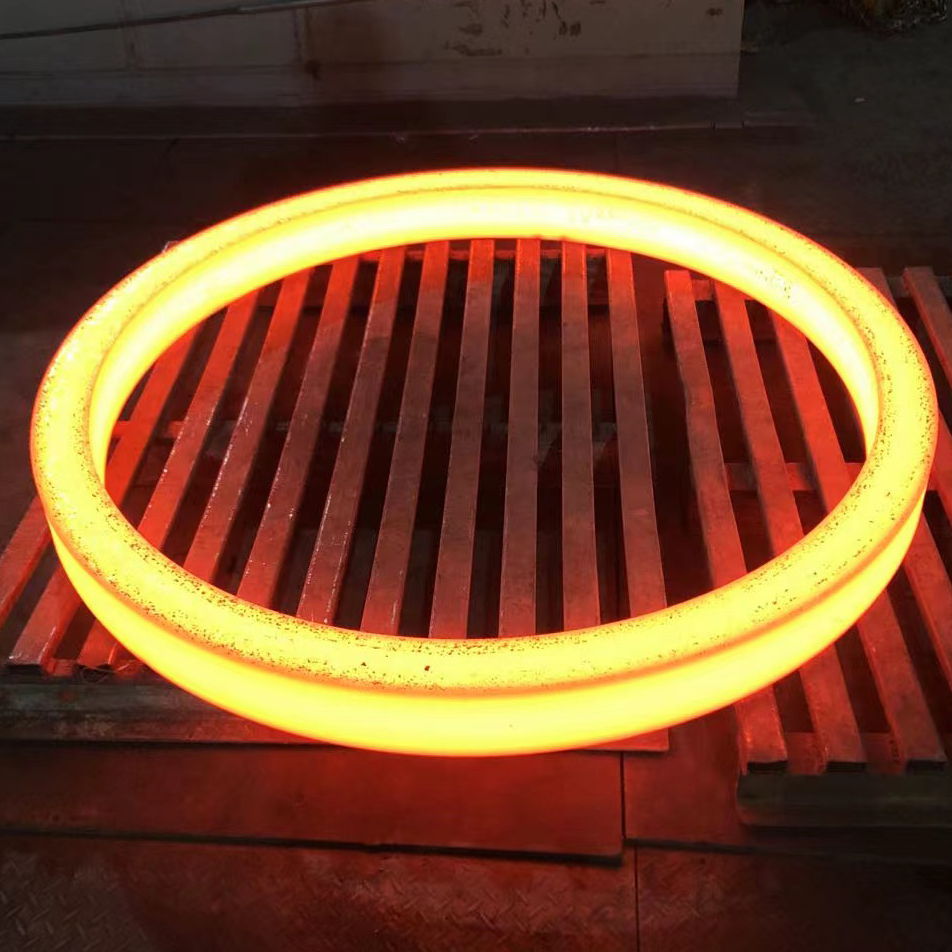
Forging Strength: The Unmatched Advantages of a Time-Tested Process.
In the world of metal manufacturing, few processes can match the proven reliability and performance of forging. For thousands of years, from the blacksmith's hammer to today's computer-controlled hydraulic presses, forging has been the cornerstone of creating the strongest and most durable metal components. It is a process where metal is shaped by applying compressive force, typically through hammers, presses, or dies, while in a solid state—often after being heated to a plastic temperature.
This method stands in stark contrast to alternatives like casting (pouring molten metal) or fabrication (welding pieces together). The fundamental principle of applying immense pressure fundamentally alters the metal's internal structure, resulting in a product with a unique set of superior properties. Here are the key advantages that make forging the preferred choice for critical applications where failure is not an option.
1. Superior Strength and Structural Integrity
The most significant advantage of forging is its ability to produce parts with exceptional strength and toughness. The forging process refines the coarse grain structure of the raw metal (ingot or bar stock) by breaking up impurities, eliminating voids, and consolidating the metal's internal structure.
As the metal is deformed, the grains flow to follow the general shape of the part, creating a continuous "grain flow" or "grain line". This unbroken grain structure provides superior mechanical properties, particularly in impact and fatigue strength. A forged part is inherently stronger than an identical part made by casting or machining from a billet because its internal structure is continuous and aligned to handle stress, not cut through by machining.
2. Enhanced Reliability and Consistency
Forgings are remarkably reliable. The process eliminates internal defects common in castings, such as gas porosity, shrinkage cavities, and cold pours. This results in a highly predictable and uniform material structure with consistent mechanical properties throughout the entire component.
For engineers, this consistency is invaluable. It allows for precise calculations of safety margins and service life. In critical industries like aerospace, oil and gas, and transportation, this reliability is non-negotiable. The consistent quality of forgings minimizes the risk of catastrophic, unexpected failures.
3. Improved Microstructure and Metallurgical Properties
Forging doesn't just shape metal; it improves it. The combination of heat and mechanical working enhances the metal's metallurgical properties:
Grain Refinement: The process produces a finer, more uniform grain size, which directly increases strength and toughness.
Density: The compressive force ensures the part is fully dense, free from the porosity that can plague cast components.
These improved properties often allow for the use of a smaller, lighter forged component to do the same job as a larger one made by another process, enabling weight savings without sacrificing performance.
4. Economic Efficiency in High-Volume Production
While the initial tooling and die costs for forging can be high, it becomes extremely cost-effective for high-volume production runs. Once the dies are created, forged parts can be produced at a high rate with minimal material waste. The process is highly automatable, leading to lower per-unit labor costs and exceptional repeatability. Furthermore, because forgings are often "near-net shape," they require less subsequent machining, saving both time and material.
5. Material Savings and Sustainability
The "near-net shape" capability of modern forging is a major advantage for material efficiency. Unlike machining, which can turn a significant portion of a billet into chips, forging uses just the right amount of metal needed to form the part. This reduces raw material consumption and waste, making it a more sustainable manufacturing choice.
Conclusion: The Forged Standard
From the connecting rods in your car's engine to the landing gear of a jetliner, from hand tools to massive industrial turbines, forged components are the unsung heroes of the modern world. The advantages of forging—unmatched strength, structural integrity, reliability, and material efficiency—make it the gold standard for manufacturing parts that are entrusted with our safety, infrastructure, and technological progress. It is a process that doesn't just shape metal; it forges excellence, building a stronger and more resilient world, one piece at a time.